How to get the most out of reviews and improve the in-store experience
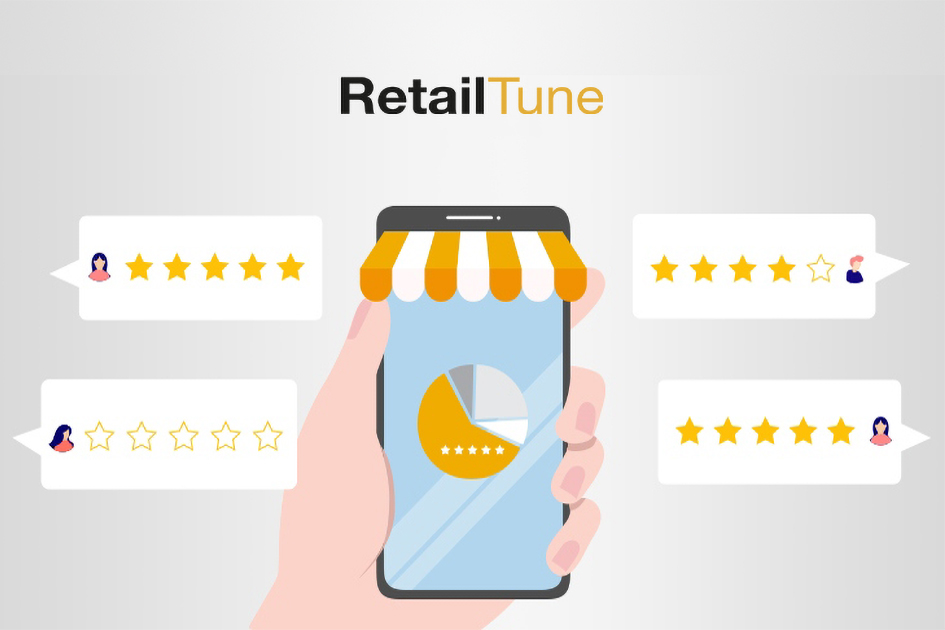
According to a study by TrustPilot, in 2020, 9 out of 10 consumers (89%) said they read online reviews before making a purchase.
Another study by Chatmeter shows that 88% of consumers rate online reviews as important as a recommendation from a friend.
Data enough to show us how important reputation is for a brand or a business.
However, in many cases, this aspect seems to be overlooked — or rather, businesses are aware of its value, but don't dedicate time and energy to managing it.
And that's a real shame, because the data derived from analyzing online reviews is qualitative: comments on product quality, staff training, the in-store experience, the perception of the store, how promotions are communicated, after-sales support — and above all, it's possible to measure customer satisfaction.
How often do you check the reviews of your stores? Do you know your average rating and the monthly trend?
These are essential questions for identifying the strengths and weaknesses highlighted by customers, from which great growth opportunities can emerge.
A negative review on a Google My Business listing that goes unnoticed, or worse, unanswered, can drive away potential customers, causing damage both to brand image and to reputation.
But that's not all — what matters most is knowing how to manage reviews, how to craft the right response to criticism, and how to point to the solution to the problem.
And now ask yourself how often you, in turn, check reviews out of personal interest: before going to a restaurant, before buying a product, before using a service, and so on?
Almost every day, surely.
Platforms like Google My Business, Facebook, Tripadvisor, Trustpilot, Booking, Airbnb and Amazon rank businesses precisely on user ratings, which means that having a higher average allows for greater visibility and therefore a greater chance of turning users into customers.
So how can you encourage users to write a review?
Explicitly asking the customer at the moment of purchase to share their in-store experience, leveraging the immediacy and the post-sale emotion, can produce great results.
Seeing a Google My Business listing with lots of reviews is also a form of social proof that boosts the store's credibility and encourages users to come in.
This is why review management is an increasingly relevant and strategic topic for brands, involving a multitude of factors: brand identity, the relationship with the customer, and ranking in search results.
For RetailTune, the Drive to Store technology platform whose mission is to create a dialogue between customer and store, managing reviews on Google My Business and Facebook has always been one of the pillars for driving the success of retailers' local strategy.
In this respect, it has built a dashboard within the platform to manage, centrally and quickly, the comments and questions left by users, making processes more efficient and optimizing response times.
Not only that — it also offers retailers a Customer Care service made up of a team dedicated to review management, defining precise guidelines together with the brand.
«Nowadays, checking reviews has become an integral part of consumers' purchasing process. As a result, the importance of this activity can no longer be overlooked by retailers.
Our experience teaches us that managing reviews on Google My Business, especially for players with many stores, is not an easy task — it takes time and special attention. – explains Claudio Agazzi, Founder of RetailTune – but we're convinced that keeping a close eye on reviews brings great benefits, not only in terms of visibility linked to better search engine ranking, but above all in terms of customer care».
To show the impact of this activity, here is RetailTune's case study for a cosmetics company operating in the beauty sector with 900 stores worldwide.
Over the past year, the average review rating has shown a positive change, rising from 3.7/5 to 4.0/5, with an 80% increase in positive reviews, peaking at 90% in some countries.